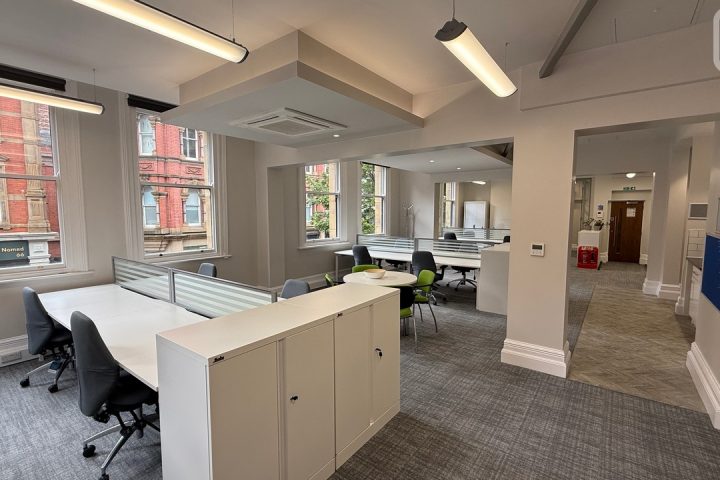
We are approaching the final quarter of the year, and it can be a demanding time for businesses. Alongside managing workloads, budgets and staffing, companies may also be reviewing their office requirements and considering whether a move is necessary.
If you want to relocate before the end of the year, starting the process early is essential. Finding the right office, agreeing terms and organising the physical move can take longer than expected, particularly if you have specific requirements.
Here is how to approach an office move efficiently.
Start by reviewing your current requirements
Before looking at properties, establish exactly what your business needs from its next office.
Consider:
- How many employees you have now
- Expected headcount over the next few years
- How often employees work from the office
- Number of meeting rooms required
- Parking requirements
- Preferred location
- Budget
- Desired lease length
This is also an opportunity to decide whether you need more or less space. A business that has embraced hybrid working may discover that its existing office is larger than necessary, while a growing company may need additional capacity.
Begin your property search early
Once you know what you need, start looking at available office space as soon as possible. The Northwest offers a wide range of options, from city centre offices to business parks and locations across South Manchester and Cheshire.
Don’t focus solely on the headline rent. Consider the total occupational cost, including service charges, business rates, utilities, parking and any fit-out requirements.
Decide how much work the office needs
The condition of the new office can have a significant impact on your timescale and budget, so weigh up your options carefully.
A Cat A office may require your business to undertake its own fit-out, while Cat A+ space can provide additional features such as meeting rooms, kitchens and partitioning.
Fully fitted and furnished, or plug-and-play, offices can potentially allow a business to move in much faster.
If you’re working towards a year-end deadline, choosing space that requires minimal work can make the process considerably easier.
Review your existing lease
Don’t overlook your current lease when planning your relocation.
Check important dates, including:
- Break clauses
- Lease expiry
- Notice periods
- Dilapidations obligations
- Rent review dates
Leaving this too late could result in your business having to pay for two properties or remaining in an unsuitable office longer than planned.
Build a realistic moving timetable
An office move involves much more than signing a lease.
Allow time for:
- Finding suitable premises
- Agreeing heads of terms
- Completing legal documentation
- Planning any fit-out
- Ordering furniture and equipment
- Arranging IT and telecommunications
- Organising the physical move
- Updating customers, suppliers and online information
Building some contingency into the schedule is sensible. Delays with legal work, contractors or technology can quickly affect your planned moving date.
Don’t rush the property decision
A year-end deadline should not mean choosing an unsuitable office simply because it is available quickly.
The right office needs to work for your business beyond the immediate move. Consider whether the location, size, specification and costs will continue to meet your requirements as the business develops.