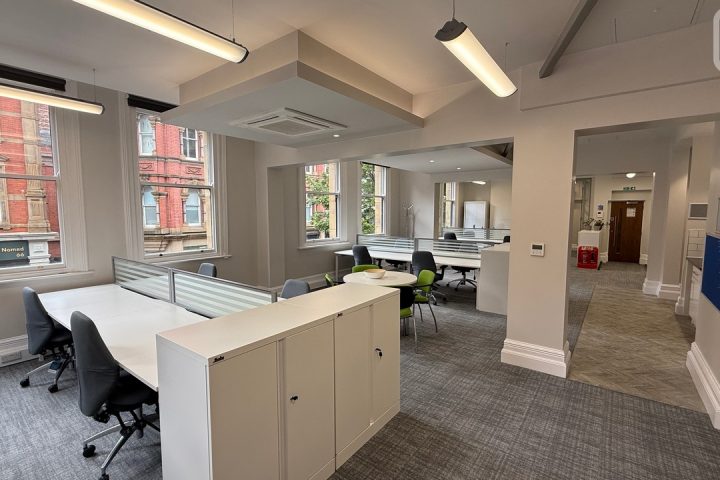
Finding the right office involves more than choosing a convenient location and an attractive building. Viewing potential premises is an opportunity to assess how well each property will support your business, employees and future plans.
Knowing what to look for can help you compare options, identify potential costs and avoid committing to space that does not meet your requirements.
1. Location and accessibility
Location should be one of your first considerations. Think about where your employees live, how clients will reach you and whether the surrounding area suits your business.
Check for:
- Public transport links and nearby railway stations
- Road connections and parking availability
- Local shops, cafés and restaurants
- Accessibility for visitors and employees with disabilities
- Proximity to clients, suppliers and business partners
Across the north west, a Manchester city centre office to rent may offer excellent transport links and nearby amenities, while further out locations in Trafford and Cheshire may provide more parking and convenient road access.
2. Size and layout
An office needs to accommodate your current workforce without making future growth unnecessarily expensive.
Look beyond the advertised floor area and consider how the space will function in practice. Are there enough desks, meeting rooms and quiet areas? Is there room for collaborative working, storage and breakout facilities?
If your business operates a hybrid working model, consider whether you need a permanent workstation for every employee or a more flexible arrangement. It is also worth asking whether the layout can be adapted as your requirements change.
3. Condition and specification
The condition of an office can have a significant impact on the cost and timescale of moving in. During your viewing, assess the flooring, decoration, lighting, heating, ventilation and air conditioning.
Look for signs of damp, damage or inadequate maintenance, and ask about the age and condition of essential building systems.
Establish whether the property is offered as Cat A, Cat A+ or fully fitted and furnished. Cat A space generally provides a basic landlord finish, while Cat A+ typically includes additional features such as meeting rooms and kitchens.
4. The total cost of occupation
The headline rent is only one part of the financial picture. Ask about service charges, business rates, utilities, parking costs and any additional building charges.
You should also establish whether the landlord expects you to contribute towards alterations or reinstatement when the lease ends.
5. Amenities and sustainability
Consider which facilities will genuinely benefit your employees and business operations. Secure cycle storage, showers, communal areas, meeting facilities and nearby food outlets may all influence the appeal of a property.
You may wish to ask about the building’s Energy Performance Certificate, energy efficiency and environmental improvements, particularly if sustainability forms part of your business strategy.
6. Lease terms and future flexibility
A successful office must work financially and operationally over the length of your occupation. Ask about the proposed lease length, break clauses, rent reviews, permitted use and any restrictions on alterations.
Working with a commercial office agent can help you identify suitable premises, assess market options and negotiate terms that reflect your requirements.