When COVID-19 hit in 2020, businesses shifted to remote work almost overnight. Six years later, many employees have never fully returned to the office, fuelling the rise in hybrid working. Yet the tide may be turning. Average office attendance has stayed above 40% every week since January, the highest sustained level since the pandemic began. Companies like Goldman Sachs and JPMorgan Chase are leading the push with strict return-to-office mandates, signalling that the hybrid era may be entering a new phase.
What’s happening with hybrid working in 2026?
In Q1 2026, 77% of new job postings were fully on-site, showing that more businesses are recommitting to physical workspaces. But how do employees feel about the shift? With 98% of workers still wanting some form of flexibility, the office can no longer rely on obligation alone to bring people in. They must earn it. That means employers need to think carefully about the amenities and design of their space offering genuine collaborative value that employees can’t easily replicate at home.
Why does the office still matter even in a hybrid model?
The office is where a company’s relational infrastructure gets built, mentorship, trust, culture, and career progression. These are hard to quantify, but they heavily influence retention and growth. Much of it happens informally: a hallway chat, a five-minute desk-side conversation, the kind of knowledge-sharing that rarely translates to a scheduled video call. That’s reflected in the data too as 73% of employees say hybrid work makes them more productive, and hybrid setups see an 11% productivity boost overall, suggesting the office isn’t obsolete so much as complementary.
What should businesses be prioritising in their office space?
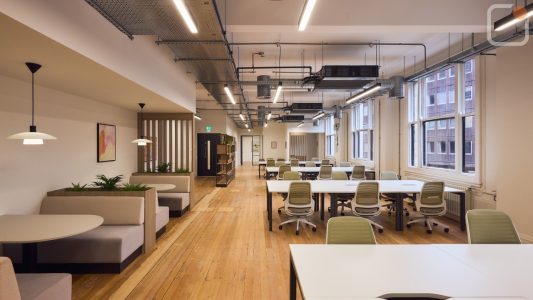
To optimise a hybrid working space, employers should move away from rigid desk assignments toward activity-based zones such as focus rooms, collaboration areas, social/lounge spaces, and phone booths. For example, a hybrid company with 40 employees may only need enough desks for 30, rotating who’s in on a given day. But there will be times when everyone needs to be in the office at once, so it’s important to build in flexible, reconfigurable spaces that can absorb extra staff when demand spikes. Some office buildings solve this by offering shared amenity spaces, which reduces the risk of overcrowding without forcing companies to pay for capacity they rarely use.
What should businesses take away when rethinking their footprint?
Companies using hybrid-optimised layouts have reduced costs by matching square footage to actual usage patterns, which is why it’s important to evaluate if your space works for you. Businesses that invest in amenities, collaboration zones, and wellbeing design tend to see a stronger buy in from employees. It reinforces a simple truth: the real question isn’t “how much space do we need” but “what kind of space earns attendance”. The businesses that get this right won’t be the ones with the strictest mandates; they’ll be the ones whose offices people are genuinely glad to walk into.
How can Canning O’Neill help?
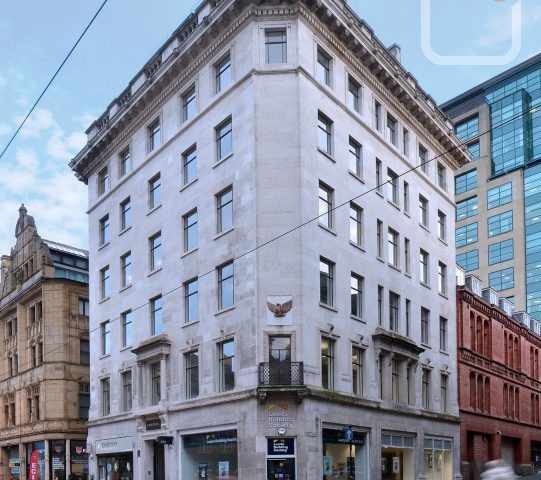
If your business is rethinking its office footprint Canning O’Neill can help you find a space that works, not just one that fits. We have properties such as 196 Deansgate that has plenty of breakout spaces and meeting rooms for when the whole team comes together. Other properties like Blackfriars offer coworking-style flexibility for busier office days. Whether you’re looking to right-size your space, find a building with strong shared amenities, or move into a fully managed collaborative environment, our team can talk you through the options and find the right fit for how your business works today.
To browse our full range of available offices or speak to the team, get in touch on 0161 244 5500 or visit our properties page.